Structural engineers are involved in the analysis and design of buildings, bridges, and other infrastructure systems. Demand for these professionals varies by region and is influenced by construction activity, infrastructure investment, and population growth. Examining where job postings are concentrated helps illustrate how demand is distributed across the United States.
This analysis is based on Civil, Environmental, and Construction industry job postings collected from CEEcareers.com. The data reflects the distribution of structural engineering job postings by state in 2025 and identifies the ten states with the highest concentration of opportunities.
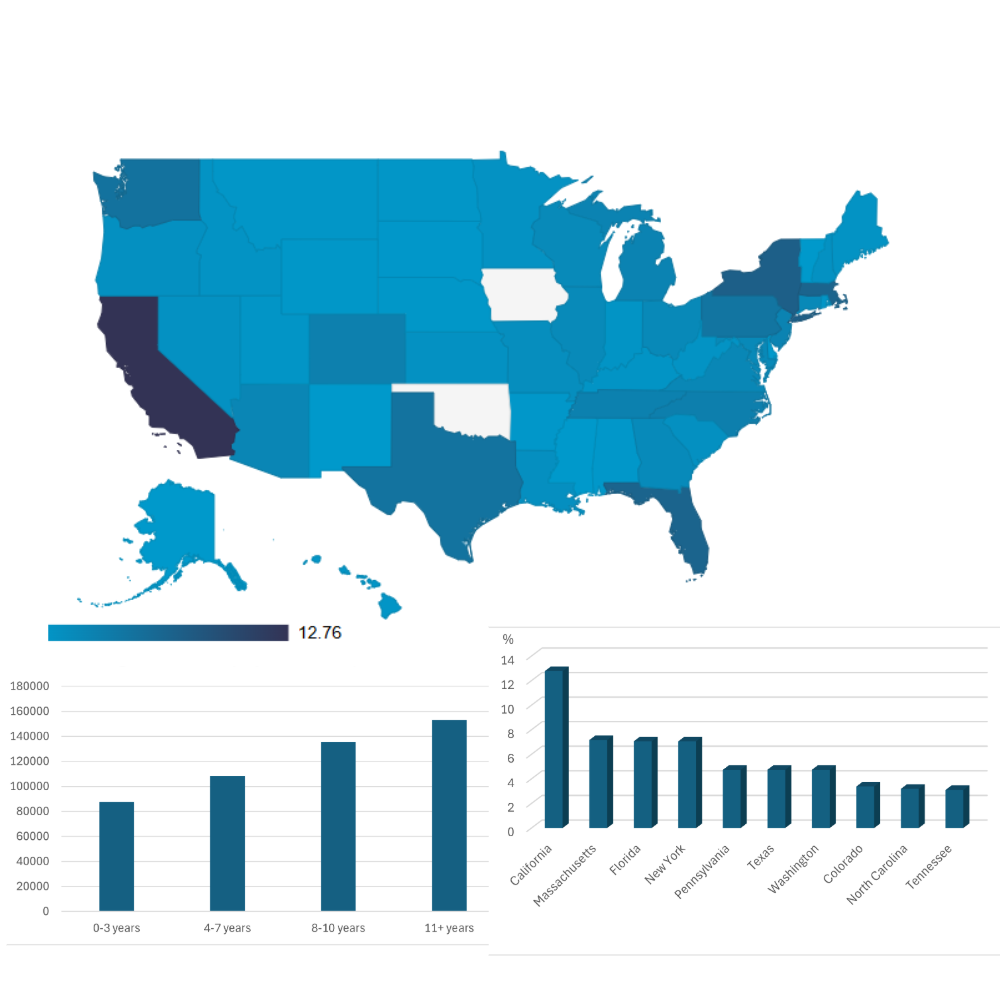
California accounts for the largest share of structural engineering job postings in 2025, representing 9.40% of the total. Florida follows with 8.67%, while Texas ranks third at 7.38%. New York represents 7.32% of postings, and Pennsylvania accounts for 6.14%, placing both states among the leading markets this year.
Illinois remains the highest-ranking Midwestern state with 4.27% of total postings. Additional states with notable shares include Washington (3.48%), Ohio (3.31%), Virginia (3.29%), and Colorado (3.10%), completing the list of the top ten states for structural engineering jobs in 2025.
In structural engineering, job postings in 2025 are heavily concentrated in full-time positions, which make up nearly nine out of ten roles. Internships represent just over one-tenth of postings, while contract and part-time opportunities appear only marginally in the overall distribution.

Compared to 2024, California, Texas, and New York remain among the highest-ranking states, although each accounts for a smaller share of total postings in 2025. Florida moves up in the rankings, while Ohio, Virginia, and Colorado appear among the top ten states in 2025 after not being included in the highest-ranked group the previous year. Pennsylvania’s share increases, while several states that ranked highly in 2024 no longer appear among the top ten in 2025.
For a broader look at employment trends in the civil, environmental, and construction industries, you can explore the full industry report here.